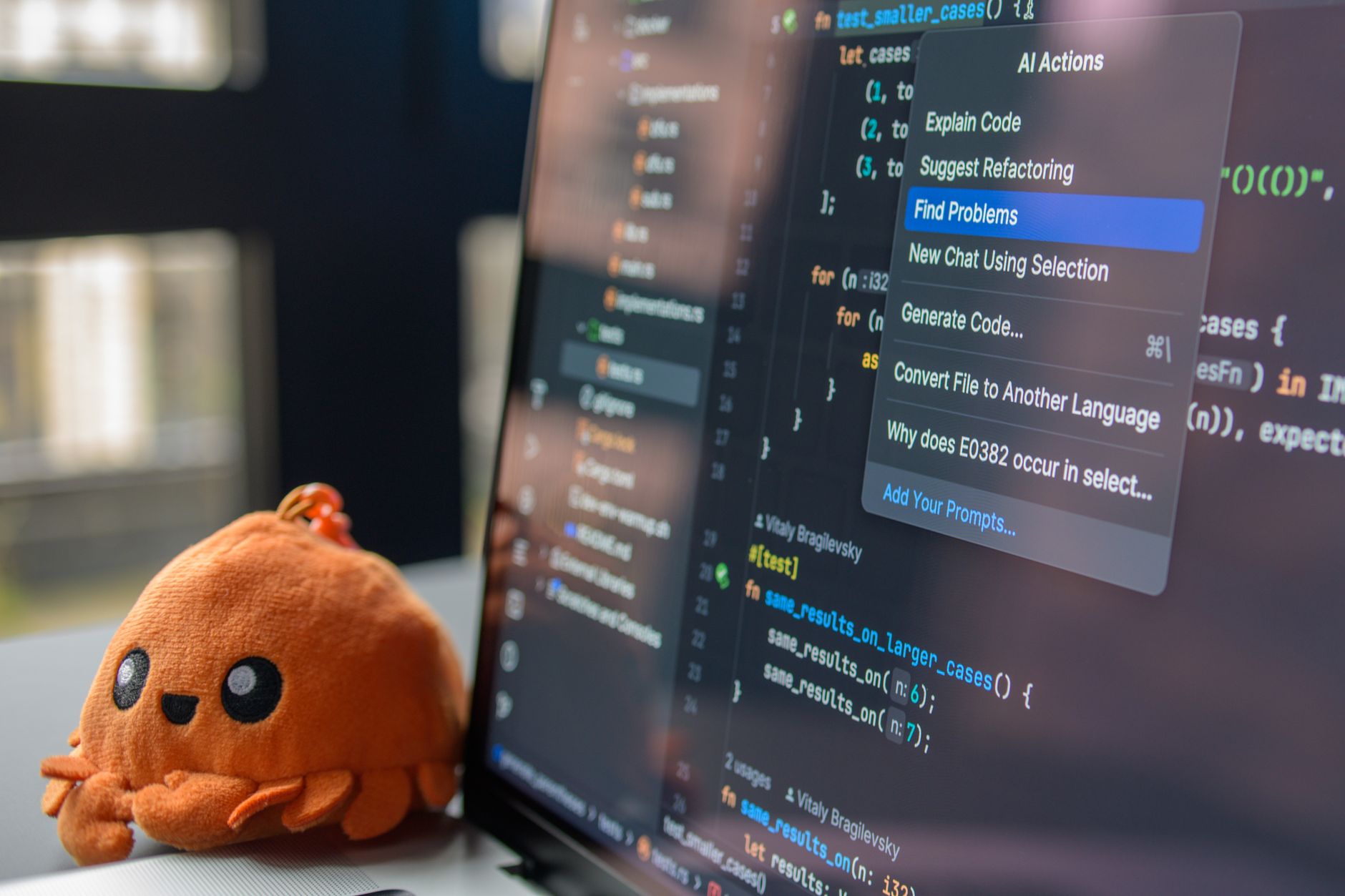


AI coding assistants are specialized software tools powered by large language models (LLMs) that help developers write, optimize, and debug code more efficiently. By integrating directly into various integrated development environments (IDEs), they provide automated support such as real-time code completion, error detection, code reviews, and text-to-code generation.
Defining the AI Coding Assistant Architecture
To truly understand the meaning of an AI coding assistant, it helps to look beneath the user interface. Unlike a standalone chat-based LLM, a true coding assistant functions as a comprehensive software product. It pairs an LLM engine with a specialized toolkit that acts as its arms and legs, all accessible through a single interface and governed by targeted programming logic.
These tools act primarily as sophisticated pattern matchers rather than conscious thinkers. They ingest vast code repositories and utilize natural language processing (NLP) to anticipate what a developer wants to write next. When a developer types out a comment or a function signature, the assistant leverages its training to predict and generate the matching syntax.
Leading examples in the software development industry include:
- GitHub Copilot: A pioneer in providing real-time inline code completions and suggestions.
- Amazon Q Developer: An assistant geared toward cloud-integrated workflows, debugging, and code generation.
- Gemini Code Assist: Google's solution for accelerating development cycles inside popular IDEs.
- Tabnine: A tool focused on streamlining code generation while maintaining strict privacy controls.
Core Features and Practical Workflows
Integrating an assistant into a daily engineering routine changes how code gets written. Rather than starting from a blank slate, developers can rely on automated support to speed up repetitive cycles. The fundamental capabilities of these systems include:
- Natural Language to Code: Writing a plain English description of a function and letting the AI generate the boilerplate implementation.
- Real-Time Code Completion: Predicting the next lines of code as the engineer types, reducing keystrokes and maintaining momentum.
- Automated Refactoring: Analyzing existing blocks of code to optimize performance, clean up technical debt, and update syntax standards.
- Error Detection and Code Reviews: Spotting potential bugs, highlighting anti-patterns, and suggesting immediate fixes before code reaches a pull request.
By automating these repetitive and mundane aspects of software engineering, these assistants free up engineers to focus on complex architectural decisions, system design, and creative problem-solving.
Comparing Traditional Coding vs. AI-Augmented Development
The shift toward AI-augmented development introduces a new paradigm for engineering teams. The table below outlines how traditional workflows differ from environments utilizing modern AI assistants.
| Development Phase | Traditional Approach | AI-Augmented Approach |
|---|---|---|
| Boilerplate Writing | Manual typing or copying from documentation and forums. | Instant generation via natural language descriptions or inline auto-completion. |
| Debugging | Manual log analysis, step-through debugging, and searching Stack Overflow. | Real-time error detection with immediate suggested patches and explanations. |
| Code Reviews | Strictly manual peer reviews focusing on style, logic, and security. | Pre-screening through AI reviews, followed by targeted human oversight. |
| Workflow Integration | Fragmented tools spanning documentation tabs, search engines, and IDEs. | Unified user interface embedded directly within the development environment. |
Managing Risks and Maintaining Code Quality
Despite their immense utility, AI coding assistants represent a double-edged sword. Because these models rely on probabilistic pattern matching, they lack human judgment regarding system architecture, business logic, and security compliance. Security and compliance are non-negotiable when utilizing generated output.
Engineers must actively guard against vulnerabilities, licensing risks, and subtle logic flaws that an LLM might introduce. The most successful development teams treat the AI as a collaborative junior partner rather than an infallible authority. By coupling automated generation with a rigorous quality and security analysis layer, organizations can safely leverage these tools to accelerate their product delivery without sacrificing standards.
Frequently Asked Questions
What is an AI coding assistant?
An AI coding assistant is a software tool powered by large language models that helps developers write, debug, and optimize code. These tools integrate directly into development environments to provide real-time suggestions and code generation.
How do AI coding assistants work?
They function by combining machine learning, natural language processing, and trained patterns from vast code repositories. They use this engine to match patterns, interpret natural language prompts, and offer automated text completions.
Are AI coding assistants safe to use for production code?
While they boost productivity, they require careful human oversight and a complementary security analysis layer. Developers must always audit AI-generated code to catch potential vulnerabilities, bugs, or compliance issues before deployment.
References & Sources
- Top 5 AI Coding Assistants
- What are AI Coding Assistants in Software Development? | Sonar
- What Are AI Coding Assistants? | IBM
- Inside the Engine: How AI Coding Assistants Work and What Every Developer Must Know Before Using Them - DEV Community
- Medium
Editorial Note: This article was researched via verified live web sources and published on 2026-10-01. Questions or feedback? Contact the editorial staff at TrendsInNews.
Photo credit: ThisIsEngineering / Pexels